The adage "a picture is worth a thousand words" is always true. On a recent outing to my 9-hole home course, I came across a curious sight at the 7th hole. I just had to snap a picture of it with my iPhone to share it here. To someone who doesn't play golf, they probably have no idea what happened. But to any golfer who has played the game a reasonable amount knows exactly what happened. Here's the picture translation in a thousand words:
A golfer played (or tried to play) golf. The golfer played poorly, or at least below their expectations. The poor play continued and the frustration level of the golfer built up like the steam in a pressure cooker. Finally, at the 7th hole, the golfer blew a gasket from hitting an awful shot with an iron. The golfer took the iron and broke the club out of anger and frustration. The rest of the thousand word description are all swear words spoken by the golfer!
Jumat, 28 Februari 2014
Jumat, 07 Februari 2014
On Location: TPC Sawgrass/Sawgrass Marriott Golf Resort & Spa
Do you want to know the status of your golf game?
Seriously, are you ready for a thorough test of your golf skills?
If so, I highly suggest you play THE PLAYERS Stadium Course at TPC Sawgrass in Ponte Vedra Beach, Florida.
It's a green grass SAT exam without the number two pencils and timer clocks. The Stadium Course provides a four-hour test that will expose any and all deficiencies in your game. This Pete Dye masterpiece challenges and confounds everyone from pros who play here every year to the once-a-month hacker who boldly believes he can break 90 and par or birdie the famous No. 17 island hole.
Unlike college entrance exams, this test is fun and memorable, even though you might return to the clubhouse after a round with some high numbers on your scorecard.
Enhancing the experience is one of the world's most amazing clubhouses and the Sawgrass Marriott Golf Resort & Spa, a multi-amenity resort designed for golfers.
GOLF
THE PLAYERS Stadium Course
Its narrow fairways with tiny target areas, immense waste bunkers, railroad tie barriers, grassy mounds and knolls and pool table-fast greens make it a supreme challenge.
An in-your-face challenge in which every shot requires patience, daring and skill, the Stadium Course has trouble with subtle and eerie regularity on almost every hole. From bunkers to lakes and undulating mounding, Dye strategically placed hazards that will gobble up errant shots faster than one of those tractor driven machines at a driving range.
CLUBHOUSE
Don't leave TPC Sawgrass without spending some time at the clubhouse, a spectacular 77,000 square-foot Mediterranean-style structure open to the public that looks like an Italian mansion air-dropped in from Tuscany. Dripping with the opulent appointments, it's an experience not to be missed.
I thoroughly enjoyed viewing the paintings on display in the lobby that depict famous happenings in TPC Sawgrass history.
A nice touch are the storyteller docents who conduct tours and weave stories about past tournaments and key moments in the history of the club.
There are two dining options:
Nineteen serves breakfast, lunch and dinner. If the weather is good, dine on the outdoor veranda, which affords fantastic views of the presentation lawn, 9th and 18th holes. For dinner, I suggest the Pan Seared Red Snapper or Pesto Roasted Chicken Breast topped off with a signature dessert, the Double Chocolate Chip Brownie S'mores (pictured).
Traditions is a fine-dining room open to the public for lunch and exclusively to club members for dinner.
ACCOMMODATIONS/AMENITIES
The Sawgrass Marriott Golf Resort & Spa has 510 guest rooms, including 21 suites. Earth tone fabrics, wood furnishings and wall art featuring beautiful color photographs of the golf settings highlight the room decor. In addition, there are 80 villa suites, each with two bedrooms, which are ideal for golfers and small groups up to eight guests.
In-room amenity highlights:
* Internet browser/Web TV
* Down/feather/foam pillows
* Wet bar
* Luxury bedding
* High-speed Internet Access
Resort amenity and services highlights:
* Full-service business center
* Concierge desk
* Access to Cabana Beach Club, a private, oceanfront club
* Complimentary resort shuttle to golf courses and Cabana Beach
* Nine restaurants, lounges, cafes and coffee shops
* 25,000 square-foot spa
* Sawgrass Kids Klub
* 56,000 square-feet of meeting and event space with 36 meeting rooms
* Jogging/fitness trail
* Two fitness centers
* Miniature golf
* 3 swimming pools
10 Little Things I Like
1. The huge, expansive, comfortable lobby of the hotel where you can stretch out and check your smart phone or work on your laptop in a relaxing environment.
2. The amazing wall art at the clubhouse in the front lobby.
3. The shuffleboard table, darts and pool table at Alice & Pete's Pub.
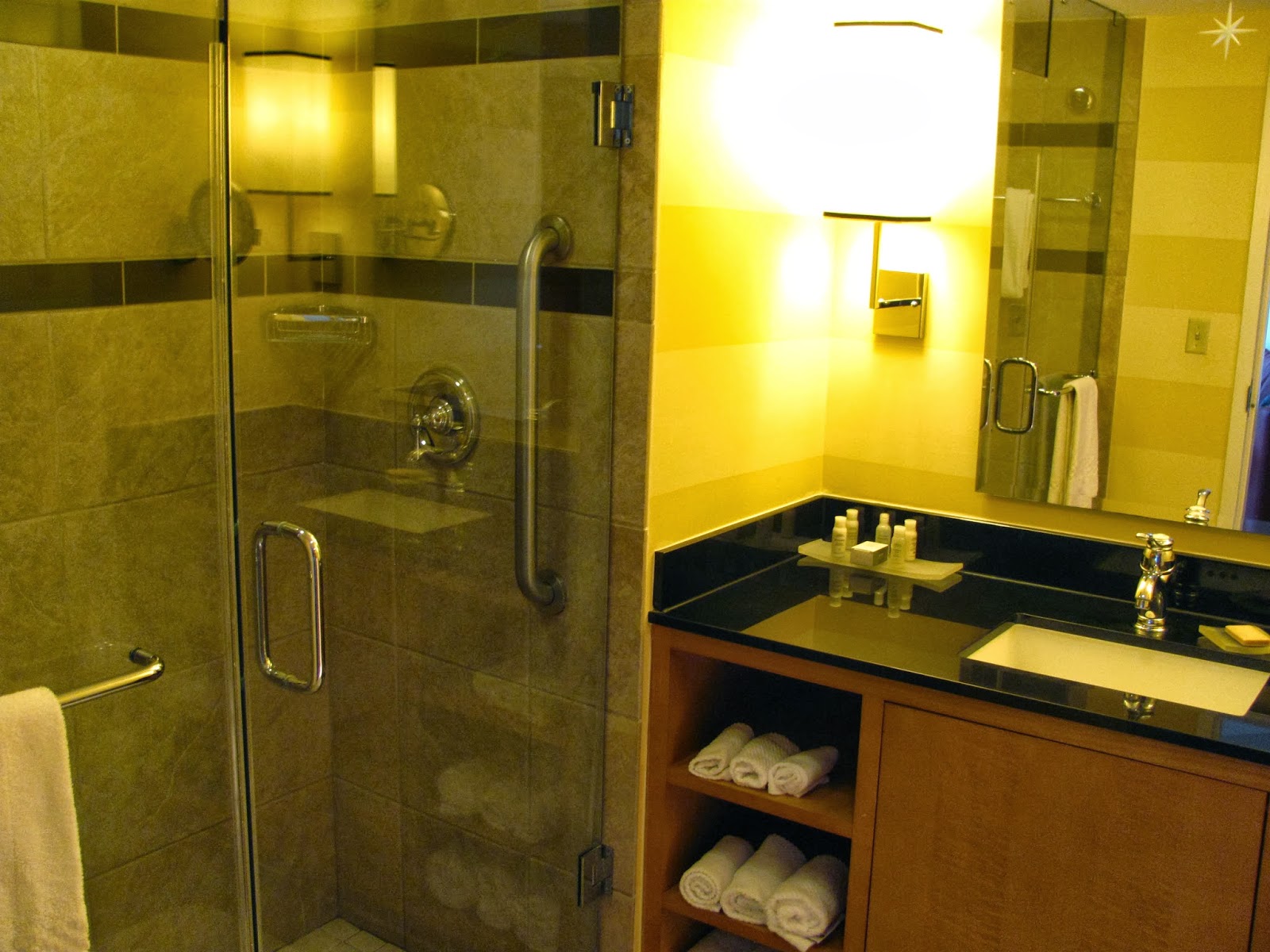
4. The large (I guess about 5 inches wide) shower head in my shower in my room.
5. The plush, Euro style bedding.
6. The large work desk in my room.
7. The locally brewed Killer Whale cream ale on tap at Alice & Pete's Pub.
8. The Starbucks near the front lobby where you can grab a cup of coffee on the way to the golf course.
9. The roasted chicken served on a bed of garlic mash potatoes at Alice & Pete's Pub.
10. The lobby bar with views of a waterfall and the par-3, 13th hole of THE PLAYERS Stadium Course.
LOCATION
TPC Sawgrass/Sawgrass Marriott Golf Resort & Spa are located in Ponte Vedra Beach, Florida, 18 miles from downtown Jacksonville and 22 miles from the historic city of St. Augustine. Jacksonville International Airport is located 35 miles from the resort.
GET THE SCOOP
Click for more information on Sawgrass Marriott Golf Resort & Spa
Click to research TPC Sawgrass
Click for more information on other TPC courses and resorts The TPC Network
Seriously, are you ready for a thorough test of your golf skills?
If so, I highly suggest you play THE PLAYERS Stadium Course at TPC Sawgrass in Ponte Vedra Beach, Florida.
It's a green grass SAT exam without the number two pencils and timer clocks. The Stadium Course provides a four-hour test that will expose any and all deficiencies in your game. This Pete Dye masterpiece challenges and confounds everyone from pros who play here every year to the once-a-month hacker who boldly believes he can break 90 and par or birdie the famous No. 17 island hole.
Unlike college entrance exams, this test is fun and memorable, even though you might return to the clubhouse after a round with some high numbers on your scorecard.
Enhancing the experience is one of the world's most amazing clubhouses and the Sawgrass Marriott Golf Resort & Spa, a multi-amenity resort designed for golfers.
GOLF
THE PLAYERS Stadium Course
Its narrow fairways with tiny target areas, immense waste bunkers, railroad tie barriers, grassy mounds and knolls and pool table-fast greens make it a supreme challenge.
Designed by Pete Dye and built in 1980, the 7,215-yard, par-72 layout is referred to as “The Stadium Course” because of its unique “built in” spectator bleachers. To accommodate spectators, many fairways are framed by high, banked slopes upon which crowds can sit. There are also bowl-shaped natural grass amphitheaters around many greens for the spectators.
An in-your-face challenge in which every shot requires patience, daring and skill, the Stadium Course has trouble with subtle and eerie regularity on almost every hole. From bunkers to lakes and undulating mounding, Dye strategically placed hazards that will gobble up errant shots faster than one of those tractor driven machines at a driving range.
Undoubtedly, the most recognizable hole and one of the most publicized in the world, is the par-3, No. 17 island hole, which makes golfers hit 132 yards over a lagoon often into a stiff Atlantic Ocean breeze. It looks like a nice, easy pitching wedge or 9-iron shot. Forget that.
Each year, more than 120,000 balls are hit in the water, an average of just less than three balls per players based on approximately 44,000 rounds played per year on the TPC Sawgrass course. The number is somewhat skewed because some players hit as many as a dozen balls into the water in an attempt to reach the green.
Even if you have a ball or two left to play the finishing hole (pictured below), it presents its own shake-in-your-golf-shoes view from the tee. A lake frames the entire left side from tee to green on the 462-yard par 4. Even if you keep your tee shot right, there’s not much space for a safe landing.
Dye's Valley Course
When you get done with Stadium Course, or it gets done with you, this 6,938-yard, par-72 layout is another legitmate Pete Dye golf test with winding fairways, large greens and lots of undulation.
Sawgrass Country Club
The Scuba guy that retrieves balls from the water on 17 at the Stadium Course probably does pretty well here as well. Water comes into play on 24 of the 27 holes at this Ed Seay design.
Marsh Landing Country Club
Tall pines, intracoastal marshes and lagoons dominate the terrain at this layout, which is often described as "a nature preserve with golf holes."
Ponte Vedra Golf & Country Club
A par-70, Arnold Palmer and Ed Seay design with tight fairways and water on every hole.
TourAcademy TPC Sawgrass
If you need a tune up or want to elevate your game, this 2,800 square-foot instructional facility with indoor hitting bays, private practice areas, chipping greens and bunkers is located adjacent to the TPC Sawgrass Clubhouse.
Dye's Valley Course
When you get done with Stadium Course, or it gets done with you, this 6,938-yard, par-72 layout is another legitmate Pete Dye golf test with winding fairways, large greens and lots of undulation.
Sawgrass Country Club
The Scuba guy that retrieves balls from the water on 17 at the Stadium Course probably does pretty well here as well. Water comes into play on 24 of the 27 holes at this Ed Seay design.
Marsh Landing Country Club
Tall pines, intracoastal marshes and lagoons dominate the terrain at this layout, which is often described as "a nature preserve with golf holes."
Ponte Vedra Golf & Country Club
A par-70, Arnold Palmer and Ed Seay design with tight fairways and water on every hole.
TourAcademy TPC Sawgrass
If you need a tune up or want to elevate your game, this 2,800 square-foot instructional facility with indoor hitting bays, private practice areas, chipping greens and bunkers is located adjacent to the TPC Sawgrass Clubhouse.
CLUBHOUSE
Don't leave TPC Sawgrass without spending some time at the clubhouse, a spectacular 77,000 square-foot Mediterranean-style structure open to the public that looks like an Italian mansion air-dropped in from Tuscany. Dripping with the opulent appointments, it's an experience not to be missed.
I thoroughly enjoyed viewing the paintings on display in the lobby that depict famous happenings in TPC Sawgrass history.
A nice touch are the storyteller docents who conduct tours and weave stories about past tournaments and key moments in the history of the club.
There are two dining options:
Nineteen serves breakfast, lunch and dinner. If the weather is good, dine on the outdoor veranda, which affords fantastic views of the presentation lawn, 9th and 18th holes. For dinner, I suggest the Pan Seared Red Snapper or Pesto Roasted Chicken Breast topped off with a signature dessert, the Double Chocolate Chip Brownie S'mores (pictured).
Traditions is a fine-dining room open to the public for lunch and exclusively to club members for dinner.
ACCOMMODATIONS/AMENITIES
The Sawgrass Marriott Golf Resort & Spa has 510 guest rooms, including 21 suites. Earth tone fabrics, wood furnishings and wall art featuring beautiful color photographs of the golf settings highlight the room decor. In addition, there are 80 villa suites, each with two bedrooms, which are ideal for golfers and small groups up to eight guests.
In-room amenity highlights:
* Internet browser/Web TV
* Down/feather/foam pillows
* Wet bar
* Luxury bedding
* High-speed Internet Access
![]() |
| Villa Accommodations |
Resort amenity and services highlights:
* Full-service business center
* Concierge desk
* Access to Cabana Beach Club, a private, oceanfront club
* Complimentary resort shuttle to golf courses and Cabana Beach
* Nine restaurants, lounges, cafes and coffee shops
* 25,000 square-foot spa
* Sawgrass Kids Klub
* 56,000 square-feet of meeting and event space with 36 meeting rooms
* Jogging/fitness trail
* Two fitness centers
* Miniature golf
* 3 swimming pools
10 Little Things I Like
1. The huge, expansive, comfortable lobby of the hotel where you can stretch out and check your smart phone or work on your laptop in a relaxing environment.
2. The amazing wall art at the clubhouse in the front lobby.
3. The shuffleboard table, darts and pool table at Alice & Pete's Pub.
4. The large (I guess about 5 inches wide) shower head in my shower in my room.
5. The plush, Euro style bedding.
6. The large work desk in my room.
7. The locally brewed Killer Whale cream ale on tap at Alice & Pete's Pub.
8. The Starbucks near the front lobby where you can grab a cup of coffee on the way to the golf course.
9. The roasted chicken served on a bed of garlic mash potatoes at Alice & Pete's Pub.
10. The lobby bar with views of a waterfall and the par-3, 13th hole of THE PLAYERS Stadium Course.
LOCATION
TPC Sawgrass/Sawgrass Marriott Golf Resort & Spa are located in Ponte Vedra Beach, Florida, 18 miles from downtown Jacksonville and 22 miles from the historic city of St. Augustine. Jacksonville International Airport is located 35 miles from the resort.
GET THE SCOOP
Click for more information on Sawgrass Marriott Golf Resort & Spa
Click to research TPC Sawgrass
Click for more information on other TPC courses and resorts The TPC Network
Jumat, 31 Januari 2014
Put Backspin on a Golf Ball!
One of the things that fascinates golf viewers is the backspin that professionals can impart on the golf ball. Oohs and aahs are usually heard when a ball lands on the green, skips to a momentary stop, and then rolls back as if on a yo-yo string. Amateur golfers struggle to replicate this impressive feat largely because they don't know that there are several necessary conditions for it to happen. Here are some of the things to maximize your chances of spinning the ball back on the green:
- Use a premium golf ball: The primary benefit of a premium ball over it's lower-cost brethren is that it is composed of multiple layers of different materials. The outermost layer is made of a soft yet durable material that is designed for maximum grip. This makes a premium ball spin much more with irons. A Top Flite rock just wont cut it. If you want to suck it back up on the green, you're going to have to suck it up and spend some green.
- Use a high-lofted iron: The combination of high trajectory and high spin makes the ball spin back on the green. The higher, the more it will roll back. When it comes to golf clubs, the higher the loft, the higher the trajectory and higher the spin. It's simple physics.
- Swing hard: The higher the swing speed, the higher the spin. Again, simple physics.
- Make proper ball contact: With irons, the clubhead should make contact with the ball on the descending part of the swing path. This minimizes interference from grass and debris and maximizes spin.
- Have a clean lie: When there is grass between the ball and the clubface, it becomes vaporized upon contact. This grass juice reduces the grip and consequently the backspin. This is why it is nearly impossible to back it up on the green from the rough. There's just too much grass getting between the ball and the clubface.
- Have clean and deep grooves: Much like the grooves in tires channel away water to allow clean contact with the road, grooves in irons allow clean contact with the golf ball to maximize backspin. The greater the groove volume, the more grass juice it can whisk away. That's why it's important to clean grooves before every shot and play with the deepest and widest grooves allowed.
Selasa, 28 Januari 2014
On Location: Renaissance World Golf Village Resort
Talk about convenience for the golf vacationer. Step out the back entrance of the Renaissance World Golf Village Resort hotel near St. Augustine on Florida's east coast and the Murray Bros. Caddyshack restaurant is only about 100 paces to your right.
To the left, is a less than a minute walk to the World Golf Hall of Fame. Best of all, the first tee of The Slammer and The Squire golf course is less than a football field away.
The PGA Tour Golf Academy is within walking distance of the hotel and the World Golf Village Spa overlooking the The King and The Bear golf course is just a few minutes shuttle away.
Away from the World Golf Village resort complex, there are two exceptional outlet shopping malls (180 stores) about five miles away and the historic city of St. Augustine, with its quaint shops, bed and breakfast inns and dozens of excellent restaurants, is about a 20 minute drive.
Accommodations
The 10-story, 4 Diamond Renaissance World Golf Village Resort has 301 guest rooms and suites. Appointed with tasteful wall art, the rooms exude a "Colonial Asian" ambiance with muted color fabrics on furniture. Amenities are plentiful with 37-inch flat-panel televisions, spa-inspired bathrooms with a walk-in showers, designer toiletries, Euro-style bedding and a wet bar and refrigerator.
Hotel amenities include:
--Complimentary shuttle service to St. Augustine
--Walking and jogging trails
--Swimming pool and hot tub
--Villagio Italian Grille Restaurant
--Starbucks at Resort Shop
--101,000 square feet of meeting space
--Villagio lobby bar
Golf

The Slammer and The Squire, designed by Sam “The Slammer” Snead, Gene “The Squire” Sarazen with consultation from Bobby Weed has generous landing areas, contoured greens and spectacular views of the World Golf Hall of Fame.
1. The phenomenal spacious atrium lobby with comfortable chairs and sofas, fountain and babbling brook that make it a great place to sit and check messages on your smart phone.
2. Great wine by-the-glass choices at Villagio Restaurant.
3. The superb Chicken Saltimbocca and Grilled Asparagus with prosciutto, radish and lemon aioli I had at dinner at Villagio Restaurant.
4. The plush European style bedding.
5. The Starbucks at the Resort Shop just off the lobby where I had a blonde roast with a swirl of carmel a few minutes after my arrival.
6. The oversize executive desk in my room that made it easy to work.
7. The short walk to the first tee of the Slammer and Squire.
8. The pods where you check-in, which are much less intimidating than a long, ominous counter.
9. The comfortable lobby bar in front of the Villagio Restaurant.
10. The outdoor patio with comfy couches and chairs where you can soak up some Florida sun and enjoy a cappuccino in the morning or cool libation in the evening as you gaze at the lake and World Golf Hall of Fame Tower.
World Golf Hall of Fame
Just a short one-minute walk from the Renaissance World Golf Village, the World Golf Hall of Fame is different in style than its counterparts in football, baseball and basketball. If your image of a sports museum is a dark, cave like structure with bronze plaques and static displays, you’ll need to readjust your thinking at the World Golf Hall of Fame.
-->
Visitors can walk across a life-size replica of the famous Swilcan Burn Bridge from the 18th hole on the Old Course at St. Andrews and putt on an old-style surface with an antique putter as they celebrate the history of golf.
To honor recent inductees, the Hall features an array of memorabilia plus large plasma televisions showcasing highlights from their careers on and off the course.
The epicenter of the museum, so to speak, is Shell Hall where members are honored on an 88-foot-long “Wall of Fame”. Equally entertaining is the Member Locker Room, which features authentic, life-like lockers, one for each World Golf Hall of Fame member. The lockers are filled with items like golf bags, clubs, scorecards, trophies, badges and other golf memorabilia as well as personal items like fly rods, baseball bats, and photos to name a few.
To the left, is a less than a minute walk to the World Golf Hall of Fame. Best of all, the first tee of The Slammer and The Squire golf course is less than a football field away.
The PGA Tour Golf Academy is within walking distance of the hotel and the World Golf Village Spa overlooking the The King and The Bear golf course is just a few minutes shuttle away.
Away from the World Golf Village resort complex, there are two exceptional outlet shopping malls (180 stores) about five miles away and the historic city of St. Augustine, with its quaint shops, bed and breakfast inns and dozens of excellent restaurants, is about a 20 minute drive.
Accommodations
The 10-story, 4 Diamond Renaissance World Golf Village Resort has 301 guest rooms and suites. Appointed with tasteful wall art, the rooms exude a "Colonial Asian" ambiance with muted color fabrics on furniture. Amenities are plentiful with 37-inch flat-panel televisions, spa-inspired bathrooms with a walk-in showers, designer toiletries, Euro-style bedding and a wet bar and refrigerator.
Hotel amenities include:
--Complimentary shuttle service to St. Augustine
--Walking and jogging trails
--Swimming pool and hot tub
--Villagio Italian Grille Restaurant
--Starbucks at Resort Shop
--101,000 square feet of meeting space
--Villagio lobby bar
Golf
World Golf Village offers two superb designs fashioned by some of the biggest names in golf. The King and The Bear, by Arnold Palmer and Jack Nicklaus, has intriguing features like beach bunkers, massive sandy fairway hazards spilling into the adjoining lakes without a lip, just like a beach.

The Slammer and The Squire, designed by Sam “The Slammer” Snead, Gene “The Squire” Sarazen with consultation from Bobby Weed has generous landing areas, contoured greens and spectacular views of the World Golf Hall of Fame.
Nearby Golf
Other exceptional resort play opportunities in the region include the Sawgrass Marriot Golf Resort in Ponte Vedra Beach, home to THE PLAYERS Stadium Course at TPC Sawgrass, The Conservatory and Ocean courses at Hammock Beach Resort in Palm Coast and the Omni Amelia Island Plantation Resort, a AAA Four Diamond Resort, a multi-course complex with several oceanside holes.
10 Little Things I like about the Renaissance World Golf Village Resort:
Other exceptional resort play opportunities in the region include the Sawgrass Marriot Golf Resort in Ponte Vedra Beach, home to THE PLAYERS Stadium Course at TPC Sawgrass, The Conservatory and Ocean courses at Hammock Beach Resort in Palm Coast and the Omni Amelia Island Plantation Resort, a AAA Four Diamond Resort, a multi-course complex with several oceanside holes.
10 Little Things I like about the Renaissance World Golf Village Resort:
1. The phenomenal spacious atrium lobby with comfortable chairs and sofas, fountain and babbling brook that make it a great place to sit and check messages on your smart phone.
2. Great wine by-the-glass choices at Villagio Restaurant.
3. The superb Chicken Saltimbocca and Grilled Asparagus with prosciutto, radish and lemon aioli I had at dinner at Villagio Restaurant.
4. The plush European style bedding.
5. The Starbucks at the Resort Shop just off the lobby where I had a blonde roast with a swirl of carmel a few minutes after my arrival.
6. The oversize executive desk in my room that made it easy to work.
7. The short walk to the first tee of the Slammer and Squire.
8. The pods where you check-in, which are much less intimidating than a long, ominous counter.
9. The comfortable lobby bar in front of the Villagio Restaurant.
10. The outdoor patio with comfy couches and chairs where you can soak up some Florida sun and enjoy a cappuccino in the morning or cool libation in the evening as you gaze at the lake and World Golf Hall of Fame Tower.
World Golf Hall of Fame
Just a short one-minute walk from the Renaissance World Golf Village, the World Golf Hall of Fame is different in style than its counterparts in football, baseball and basketball. If your image of a sports museum is a dark, cave like structure with bronze plaques and static displays, you’ll need to readjust your thinking at the World Golf Hall of Fame.
-->
Combining a Disneyesque flair for entertainment, cutting-edge design and innovative display techniques, the exhibits in the World Golf Hall of Fame appeal to casual observers as well as golf fanatics.
Visitors can walk across a life-size replica of the famous Swilcan Burn Bridge from the 18th hole on the Old Course at St. Andrews and putt on an old-style surface with an antique putter as they celebrate the history of golf.
To honor recent inductees, the Hall features an array of memorabilia plus large plasma televisions showcasing highlights from their careers on and off the course.
One of the World Golf Hall of Fame’s most visited areas is the Trophy Tower, which holds a collection of golf’s major championship trophies as well as The PLAYERS Championship, U.S. Amateur and World Golf Championship trophies.
The epicenter of the museum, so to speak, is Shell Hall where members are honored on an 88-foot-long “Wall of Fame”. Equally entertaining is the Member Locker Room, which features authentic, life-like lockers, one for each World Golf Hall of Fame member. The lockers are filled with items like golf bags, clubs, scorecards, trophies, badges and other golf memorabilia as well as personal items like fly rods, baseball bats, and photos to name a few.
Among the current featured exhibits are “Nancy Lopez: Pride, Passion, and Personality” and “Bob Hope: Shanks for the Memory.”
Location
Renaissance World Golf Village Resort is situated just off Interstate-95 about 12 miles northwest of St. Augustine and 20 miles south of Jacksonville.
Contact Information
You can click to the Renaissance World Golf Village website or call 888-740-7020 or 904-940-8000.
Location
Renaissance World Golf Village Resort is situated just off Interstate-95 about 12 miles northwest of St. Augustine and 20 miles south of Jacksonville.
Contact Information
You can click to the Renaissance World Golf Village website or call 888-740-7020 or 904-940-8000.
Sabtu, 25 Januari 2014
Streamsong Golf Resort
I know I said Augusta would be my last post, but I wasn't anticipating golf at Streamsong.
The winning formula for a new golf resort over the last fifteen years has consisted of a visionary developer acquiring some inexpensive land in a remote location, almost always near the ocean; hiring a new golden-age minimalist golf designer or two, and building some great golf courses. The visionaries have included an eccentric Chicago millionaire, Mike Keiser, who began the trend with Bandon Dunes. This was followed by a Tasmanian spud farmer, Richard Sattler, with the Barnbougle resort in Australia, and a golf obsessed Canadian, Ben Cowan-Dewar who moved his family to a remote Canadian village to pursue his dream. The golf architects of choice in our modern times are Tom Doak and the team of Coore & Crenshaw. So, will the formula work if the visionary developer is a NYSE listed commodity company and the inexpensive land is not near the water?
While it might not be as romantic a story as the first three, the answer is a resounding yes.
The modern style clubhouse at Streamsong paradoxically fits in and looks appropriate
I would like to add my voice to the chorus of praise being heaped on the Streamsong golf courses in Florida. My mental image of Florida golf is flat terrain, palm trees, thick Bermuda grass and lots of water. Streamsong is the opposite of “typical” Florida golf, located east of Tampa and South of Orlando in the geographic middle of the state. I know this offers a simplistic view of Florida golf; the reality is, the state has some pretty diverse courses such as Calusa Pines and World Woods. But, you get my drift, which is that this is not like Doral, PGA National, TPC Sawgrass, Bay Hill, Seminole or the myriad of flat courses with an abundance of water hazards.
This part of Florida is less traveled and semi-rural; the town that Streamsong is located in has less population than some blocks in Manhattan. The large amount of jobs created by Streamsong is a mini boom to the area, which is dotted with farms and ranches. Florida is the third largest state in terms of cattle production and this is visible as you drive to Streamsong. The other big industry in this part of Florida is phosphate mining, which brings us to why the courses were built. The Mosaic Company has been extracting phosphate, a key component of fertilizer, in the area, for years. In fact they still are, as you drive to and play the course you can still see their facilities all around you. Some very wise executives at Mosaic, who are clearly among us golf obsessed, had the vision to take the land that was mined and re-purpose it into a golf resort.
One of the benefits of the way phosphate is mined (apologies to my tree-hugging readers) is that it is extracted from beneath the ground, thus large amounts of earth are removed and piled up. 12 million yards of earth were moved between the two courses, Tom Doak has estimated. This process took an otherwise flat terrain and created sand dunes and lots of elevation changes. The other natural benefit of Streamsong is that Florida was at one time under water, thus the soil is very sandy, having been a sea bed in earlier millenia. In fact, our caddie told us they frequently find sharks teeth among the sand.
Having played Bandon, Cabot Links and the Barnbougle resorts I can state definitively that Streamsong can proudly join the ranks of golf destinations worth going out of your way for. At several times throughout the day I was reminded very much of playing at Barnbougle in Tasmania in particular. The picture below gives you a good sense of why. Florida does not come to mind when looking at this picture, taken from the third tee of the Coore & Crenshaw course.
A vista from the Coore/Crenshaw course, 3rd tee looks nothing like Florida
My memory is not particularly good and I personally find the names of the courses, Red and Blue to be confusing. When thinking back I often got confused trying to recall which was Red and which was Blue. A little multiple-choice trivia question to begin. The courses were named Red and Blue because:
(a) Tom Doak happens to live in a blue state and Coore/Crenshaw in red states and the owners were making a political statement.
(b) The third course is going to be called White and the owners are going with a patriotic theme.
(c) The course names represent the color of the ink the course architects used when routing the courses on a map simultaneously when looking for potential designs.
The correct answer is the more mundane C. It would be simpler if they named them simply the Doak course and the Coore & Crenshaw course.
(a) Tom Doak happens to live in a blue state and Coore/Crenshaw in red states and the owners were making a political statement.
(b) The third course is going to be called White and the owners are going with a patriotic theme.
(c) The course names represent the color of the ink the course architects used when routing the courses on a map simultaneously when looking for potential designs.
The correct answer is the more mundane C. It would be simpler if they named them simply the Doak course and the Coore & Crenshaw course.
Although there are trees at the perimeter of both courses, they do not come into play, both are wide open and bumping and running the ball are a delightfully consistent part of the golf here. The tee areas at Streamsong blend into the fairways and are not really distinctive tee boxes. This no doubt makes mowing and maintenance easy, and creates a lot of options on tee placement.
Nowhere is this more in evidence than the fifth hole on the Blue (Doak) course. The hole is a downhill par three of between 102 and 150 yards depending on the tees you play and where the pin is. When we got to the tee someone in my group pointed out that you could actually putt the ball to the green given that the flag was front left and there was fairway all the way from tee to green. As I am always up for a stupid challenge I decided to tee off with a putter and ended up about a foot short of the green!
The par three fifth hole on the Doak course at Streamsong gives many options including putting off the tee
The green is quite large lengthwise, at first I thought it might be part of a double green complex, but it is not. I walked it off at 245 feet from side-to-side, so most of the time putting may not be a good option, but it did create a lot of debate about whether this was a good design feature or not; personally I liked it. Streamsong lists holes-in-one on their website, including the club used for those that have already gotten them, and they range from a 54 degree wedge up to a 7-iron. One of my new goals is to get listed on the site with the club listed as “putter”.
My favorite hole on the Doak (Blue) course is the par three seventh which is “the” picture hole everyone captures when playing Streamsong, and for good reason. It is such a picturesque hole of between 178 and 203 yards, and a delight to play over water into such a secluded area between the sand dunes.
"The" picture hole at Streamsong, the par three seventh on the Doak (Blue) course
Another hole I really liked is the sixth hole, which, coincidentally, has the same hole number and reminded me of the sixth hole at St. Enodoc in England, one of Tom Doak’s favorite courses. The dominant feature on the hole is the huge "Himalaya" sand dune on the left side of the hole near the green.
Streamsong Doak (Blue) sixth hole with a Himalaya sand dune
I left my ball in the “cleavage” between the two humps on the green!
The enticing green, Streamsong Blue, sixth hole
The other hole I really liked is number thirteen (not pictured) similar to a hole at Pacific Dunes, a par four of between 279 and 312 yards that gets progressively more narrow as you get to the green, which is set up on a hill and is well bunkered.
Some of the greens on the Blue course are border line tricked up, like the twelfth, a par four, with its massive humps and slope.
The very tricky twelfth green, Streamsong Blue
Putting is one of the strong suits of my overall deteriorating and currently mediocre game, and I found the greens on the Blue course to be very difficult to read and putt on, as did the other three golfers in my group. It takes quite a bit of time to adjust to the putting on both courses given that almost all the greens have pretty good contours.
I know I am comparing the holes at Streamsong to a lot of other courses, but I do think they are apt. The tenth (Blue) reminds me of Kingston Heath near Melbourne with its flat terrain and abundance of bunkers. In some respects this shouldn't be too much of a surprise since the terrain and sandy soil are very similar here to the Sandbelt region of Melbourne.
Streamsong Blue, par three tenth hole, shades of Kingston Heath
The Blue course has a gentle start to ease you into the round, the first half dozen holes being relatively easy. The first tee shot plays from atop a large sand hill downwind to a wide open fairway. It is good for the ego to begin your round this way. The tee box is one of the highest points on the property which has a total elevation change of 75 feet. The easy start is more than made up for with the difficulty of the finish. Sixteen is a par three of over 200 yards playing into a cross-wind and sloping left to right all the way. I think the hole is too penal given the cross-wind, the severity of the slopes and the bunkers. I get it, golf doesn't always have to be fair, rub of the green and all that, but sometimes the balance is tipped too far like it is here.
The seventeenth is a LONG par five, approaching 600 yards from the back tees. I’m not sure if the prevailing wind is the same as the day I played, but it was into us. In addition to the length, the hole gently rises from tee to green. The second shot is a crucial one where you have to decide whether you can carry the large bunkers set at an angle to the fairway up a sloping hill. It’s a big hole, reminiscent in some respects of the fourth hole at Bethpage Black.
Bethpage Black meets Sand Hills on the 17th at the Doak Course, Streamsong
I played the Blue course in the morning and then immediately played the Coore & Crenshaw course, which has a difficult start. For those looking for a maximum challenge, play the Blue first followed by the Red and you have the most difficult half dozen holes on the property in a row.
The par three sixth on the Coore & Crenshaw (Red) course, Streamsong
The Coore & Crenshaw course and the Doak courses have many similarities as the two designers don't have very different styles in their minimalist design approaches. Tom Doak calls the courses "cousins" rather than "twins" and I think that is right. I found the Coore & Crenshaw design has more of the course out in front of you and less blind shots. On the front nine of the Doak course alone the second shots on the first and fourth holes are blind as is the tee shot at nine. The Doak course has wider fairways and wilder greens. The Coore & Crenshaw course has slightly narrower fairways and slightly less sloped greens.
I enjoyed the Coore & Crenshaw course, as I always do, since their design aesthetic suits my eye. I particularly enjoyed holes fifteen through seventeen, probably the best three hole stretch on the property. Number sixteen is a Biarritz style hole of between 160 and 208 yards that plays over the same lake as the seventh hole on the Blue course.
The sixteenth "Biarritz" hole on the Coore/Crenshaw Course
Closeup of the Biarritz green, the 16th hole on the Red course
The predominant impression coming away from Streamsong is the sand dunes, however, both architects also took advantage of the savanna the course is on. One of the things that makes Cypress Point so special is that the course has six holes routed through the dunes, six holes routed through the trees and six holes routed along the water. Streamsong doesn't have any holes routed across the water obviously, but there is more variety that meets the eye, particularly the holes routed through the grassy plains part of the property that abuts the trees. These include the ninth and tenth of the Blue course and the twelfth and seventeenth (below) on the Red course.
The seventeenth hole Streamsong Red at dusk shows off the variety of challenge
There is much debate about which course is better and which people prefer playing. I am not going to join that particular debate as I like both courses a lot. They are both similar in the sense that they are courses that encourage you to use the ground to bump and run shots and both place a premium on putting. I can't tell you the last time I walked and played 36 holes in a day, but I did happily at Streamsong. Like at Sand Hills, Cabot Links, Barnbougle and Bandon, Streamsong is one of those places when you finish your round you want to head right back to the first tee and play again. For those who can't access Sand Hills in Nebraska, Streamsong is a credible public alternative to see the genius of Coore & Crenshaw. The courses are built on 2,300 acres of the 16,500 that Mosaic owns in this area and nature is in abundance. While playing we saw a large turtle crossing one fairway and we saw an ominous looking long black snake in the rough. Some bunkers had unsettling sized paw prints in them from Bobcats which inhabit the area. Other wildlife present include deer, wild hogs, wild turkey and the more typical for Florida: alligators lurking in the water.
A shot from the seventh hole, Coore & Crenshaw course, similar to Sand Hills in Nebraska
So where do the courses rank among Florida golf? Where do they rank in the world? How is it compared to Bandon? I would say they rank pretty high among Florida golf, along with Seminole among the top three. It is less windy than Bandon, making it a big plus in my book. Plus, you can leave New York in the morning, fly down and play a round before sundown which makes it very convenient. Arguably it is easier to get to Streamsong than it is to Kiawah or Pinehurst. Hard to say where these courses would land in the world rankings, but I think it is safe to say they belong there as they rank ahead of a dozen or two of the courses currently on the list. Maybe I am suffering from rating and ranking fatigue (pretty ironic coming from me) given all the new courses coming on line and all of them hyped as top 100. Putting aside the rankings, they are special courses to play and worth a journey.
Both courses are designed for walking and it is strongly encouraged. I have a lumbago and am getting old, but with some help from my Advil I found the courses easy to walk. After 9:30 am you can take a cart and a fore-caddie, although the carts can only go around the perimeter of the course, so you probably walk as much as if you didn't have a cart. Streamsong also offers an interesting option for playing. A six hole or twelve hole round is available after 2:00 pm, which I think is a great idea.
The new hotel doesn't quite fit in, it looks more like a corporate headquarters or hospital building, but that is pretty much the only thing on the whole property that doesn't perfectly fit in
Service was outstanding throughout the day, everyone was chipper and attentive and my caddie, Noah Zelnik, a former tour caddie and PGA player was as good as I've ever had. Kudos to the nameless visionary executives at Mosaic who had the fore-sight to develop this into something so appealing and classy. The property is isolated enough that you see no cars nor do you hear background din from a highway, and the hotel has a place on its roof where you sit out and take advantage of star gazing since there is no "light pollution" in the area. It was bold to setup the courses to strongly encourage walking so that you could truly take nature in and enjoy the ambiance of the quiet and beautiful surroundings.
I can't wait to go back.
Langganan:
Postingan (Atom)